
The advent of single-atom catalysts (SACs) has ushered in a new era in heterogeneous catalysis, offering the ultimate in atom utilization efficiency and unlocking catalytic properties that are often unattainable with their nanoparticle counterparts. This transformation is particularly crucial for noble metals, where scarcity and cost are perennial concerns, as SACs promise to maximize the performance of every single atom. Despite tremendous progress in synthetic methodologies, including atomic layer deposition, high-temperature pyrolysis or thermal migration, and a host of other elegant techniques, the field is currently at a critical turning point. The core challenge has shifted from lab-scale material fabrication to industrial translation, i.e., how to simultaneously realize the scalable, structurally precise, and batch-stable/reproducible synthesis of noble metal SACs?. Traditional batch-type syntheses, while effective on a milligram scale, are plagued by a formidable “scaling-up effect”. As the reactor volume expands, the inherent limitations of mass and heat transfer lead to spatiotemporal inhomogeneities in precursor concentration and temperature. These non-uniform local environments form supersaturation “hotspots”, which uncontrollably drive the migration and agglomeration of isolated metal atoms into catalytically distinct nanoclusters/nanoparticles (NCs/NPs). This loss of single-atom fidelity not only degrades performance but also leads to irreproducible results, erecting a seemingly insurmountable barrier between promising laboratory findings and practical applications. Thus, the critical question nowadays is how to fundamentally overcome the physical laws of mass/heat transport that govern aggregation during scaling-up to achieve a general, scalable synthesis of uniform, high-performance noble metal SACs.
As we know, microfluidic synthesis represents an advanced methodology owing to its precise manipulation of fluids within micron- to millimeter-scale channels, distinguished by superior capabilities in reaction environment control, mass transfer efficiency, reagent utilization, and scalability.Over the past two decades, microfluidic synthesis has been widely used to produce nanoparticle catalysts with controlled morphology and size. Unfortunately, the very limited experimental explorations on the microfluidic synthesis of SACs have not achieved gram-scale production, largely due to complex setups, high energy consumption, or ultralow microliter-scale throughput. Therefore, the continuous-flow synthesis strategy that features simple equipment, a well-defined mechanism, and genuine scalability remains an urgent need in SACs field. Notably, the excellent mass and heat transfer in microfluidic reactors only provides external conditions for scalable SAC production. To fundamentally suppress metal aggregation and realize stable high‑loading anchoring, the intrinsic properties of the support are equally essential for strong precursor capture and robust anchoring. In recent years, with unique hierarchical nitrogen-doped carbon nanocages (hNCNC), we developed the simplest impregnation-adsorption method for noble metal SACs construction via the synergism of micropore trapping and nitrogen anchoring, yielding Pt1/hNCNC with a maximum Pt1 loading of ca. 5.68 wt% and excellent hydrogen evolution reaction (HER) performance.
Recently, the research group of professor Zheng Hu at the Key Laboratory of Mesoscopic Chemistry of MOE has presented a transformative solution to scalable microfluidic synthesis of noble metal SACs by combining the merits of the impregnation-adsorption method, using the synthesis of Pt1/hNCNC as our primary model. Our central hypothesis is that the unique mass-transfer environment of a microfluidic reactor can establish a continuous local adsorption equilibrium, thereby circumventing the transient supersaturation that triggers aggregation in batch processes. By integrating multiscale theoretical simulations with comprehensive experimental validation, we elucidate a “dual-scale cooperation” between macroscopic fluid dynamics and microscopic support chemistry that enables this paradigm shift. This approach achieves a remarkable 300-fold increase in productivity over the batch counterpart, pushes the maximum Pt1 loading up to 10 wt%, and demonstrates exceptional generality across a suite of noble metals (Pd, Au, Ir, Rh, Ru and multi-elements) and nitrogen-doped carbon supports. Crucially, ultralow loading (20 μgPt cm−2) of flow-synthesized 10 wt%-Pt1/hNCNC on cathode ensures stable operation of proton exchange membrane water electrolyzers (PEMWE) over 500 hours at industrial current densities, validating the industrial potential of our scalable synthesis. This study establishes a scalable and versatile paradigm for manufacturing noble metal SACs, effectively bridging the critical gap between laboratory discovery and industrial application in the field of single-atom catalysis.
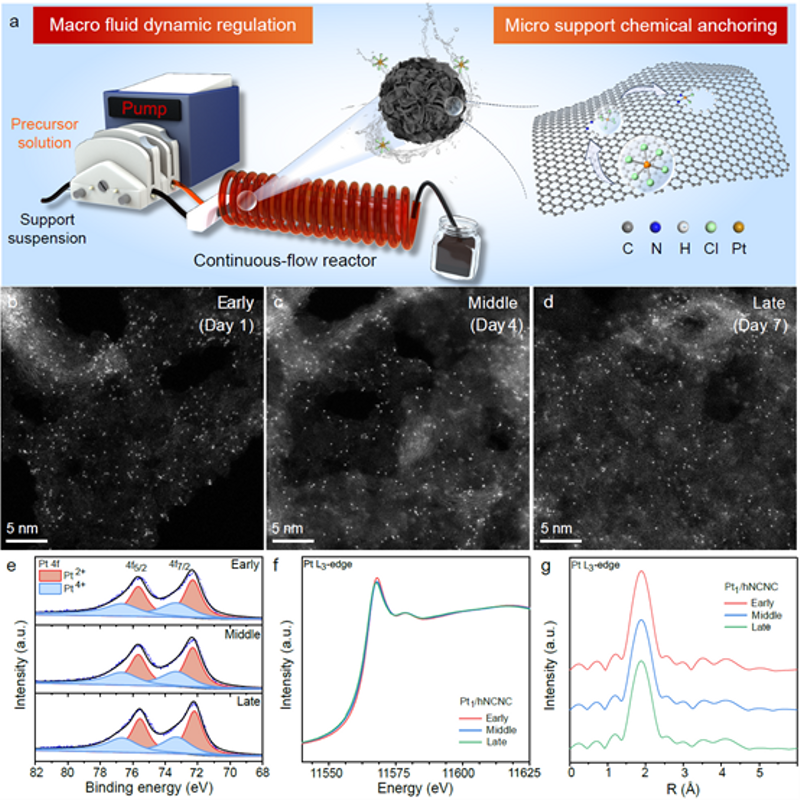
Figure 1. Structural uniformity of Pt1/hNCNC via microfluidic synthesis.
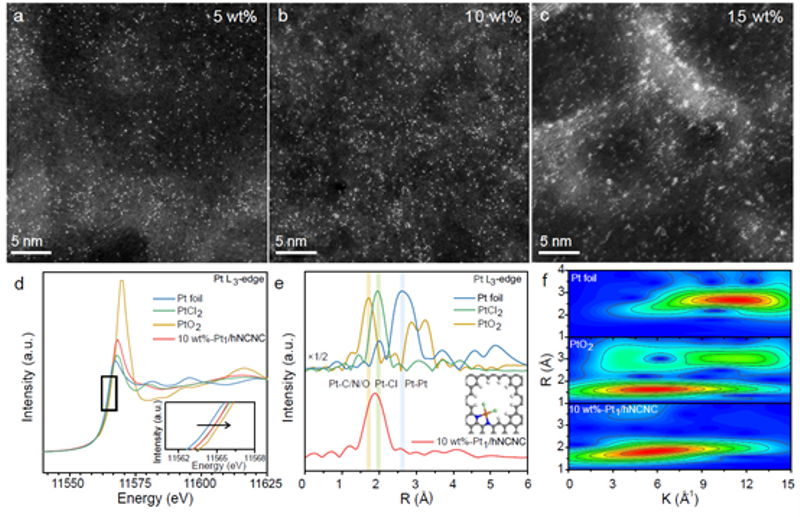
Figure 2.Maximum loading of Pt1/hNCNC via microfluidic synthesis.
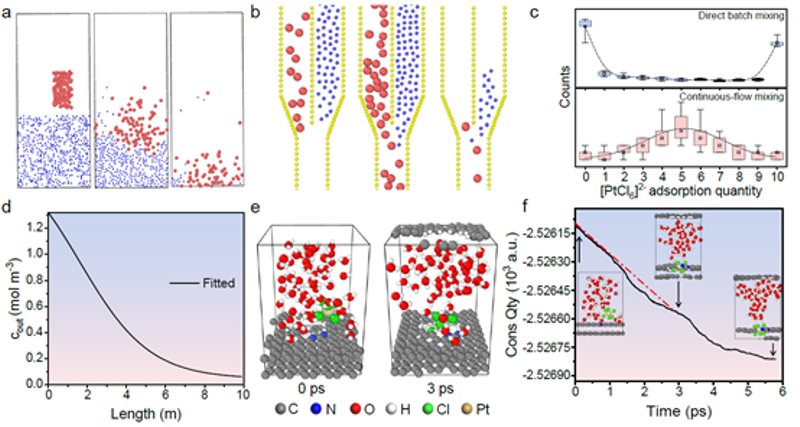
Figure 3.Theoretical modelling of batch and microfluidicsynthesis.
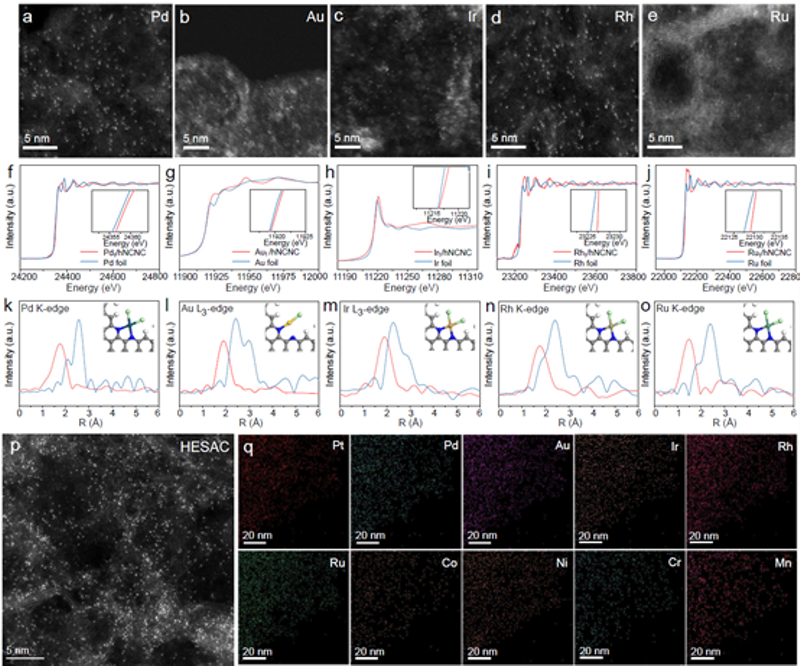
Figure 4. Morphology and structure characterizations of M1/hNCNC (M=Pd, Au, Ir, Rh, Ru) and HESAC.
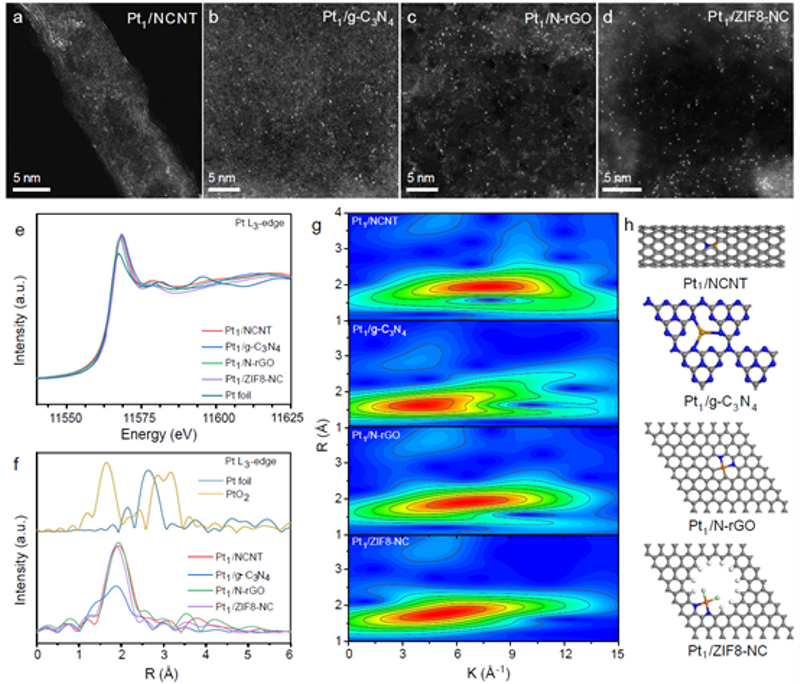
Figure 5. Morphology and structure characterizations of Pt1/NC (NC=NCNT, g-C3N4, N-rGO, ZIF8-NC).
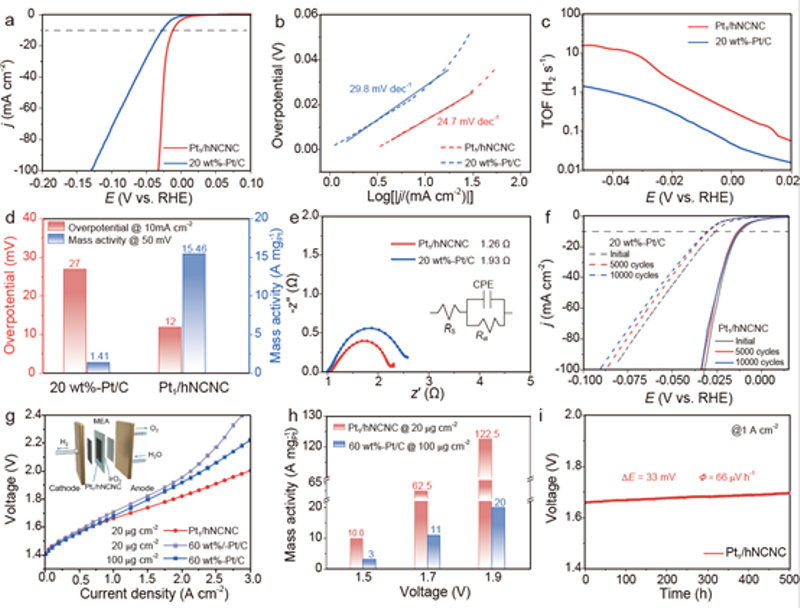
Figure 6. Electrocatalytic HER and PEMWE performances of 10 wt%-Pt1/hNCNC.
The related paper entitled “Scalable microfluidic synthesis of noble metal single-atom catalysts” has been published on National Science Review (Paper link: https://academic.oup.com/nsr/article/13/15/nwag276/8678860, DOI: 10.1093/nsr/nwag276). Dr. Jingyi Tian and Cao Zhou are the co-first author. Prof. Qiang Wu, Prof. Lijun Yang and Prof. Zheng Hu are corresponding authors. This work was jointly supported by the National Key Research and Development Program of China (No. 2021YFA1500900), the National Natural Science Foundation of China (No. 22479073), the Natural Science Foundation of Jiangsu Province, Major Project (BK20253051, BG2024033), and the Yangtze River Delta Science and Technology Innovation Community Collaborative Research (Basic Research) Program Project (No. 2025CSJZN00700).