
Recently, the research group led by Weigao Xu at Nanjing University, in collaboration with the teams of Qihua Xiong and Huajian Gao at Tsinghua University, proposed and experimentally verified a novel mechanism for optical cooling. Driven by phonon-assisted interfacial charge transfer (ICT), this new approach was achieved by modulating the interlayer coupling interactions in two-dimensional (2D) semiconductor heterostructures. The related findings were published online in Nature on June 24, 2026, entitled "Optical cooling by interfacial charge transfer in 2D heterostructures".
Solid-state laser cooling technology offers a highly promising cryogen-free temperature control approach for quantum materials and micro/nano-electronic systems. Currently, the mainstream solid-state laser cooling mechanism relies on phonon-assisted up-conversion photoluminescence (UCPL). However, this mechanism imposes extremely stringent requirements on materials, demanding a close-to-unity external quantum efficiency (EQE) and near-zero parasitic absorption. Previously, these rigorous conditions could only be met in a rare variety of semiconductor materials, such as cadmium sulfide nanoribbons and certain halide perovskite crystals. For 2D semiconductors, the EQE is typically below 10%; although phonon-assisted up-conversion photoluminescence has been experimentally observed, no experimental attempts have achieved net cooling.
To address this bottleneck, the research team took an alternative approach, exploring the feasibility of interfacial charge transfer as a non-radiative pathway for heat extraction. The team first proposed the concept of ICT-driven laser cooling (Figure 1). In 2D semiconductor heterostructures with a type-II band alignment, by regulating the interfacial coupling state, the system maintains high charge transfer efficiency while introducing momentum mismatch conditions. This enables the extraction of lattice phonon energy (manifesting as an apparent charge transfer barrier) in the electron donor component. The system also leverages the massive thermal resistance at the interface to effectively block heat backflow, achieving a unidirectional heat flow.
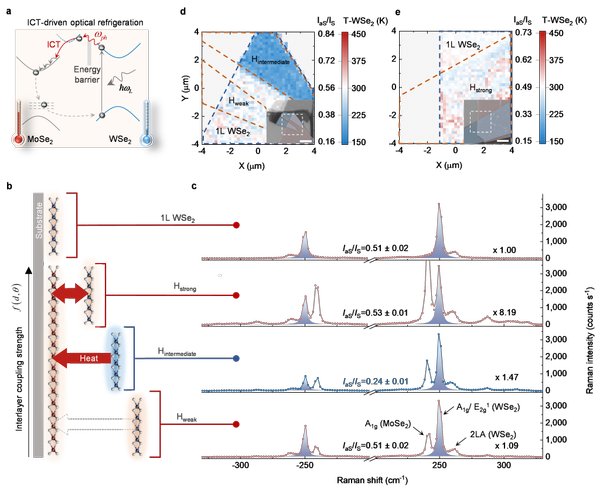
Figure 1 | The concept of ICT-driven optical refrigeration and observation of anomalous phonon population of WSe2 in a WSe2/MoSe2–Hintermediate heterobilayer
In a typical type-II 2D heterostructure system like WSe2/MoSe2, the team precisely controlled the interlayer distance and twist angle using an aligned dry-transfer technique, successfully constructing a heterostructure in an "intermediate coupling" state. Unlike strongly and weakly coupled heterostructure counterparts, the WSe2 component in the intermediate coupling state exhibited pronounced low-temperature spectral signatures under optical excitation, including a significant drop in the anti-Stokes/Stokes Raman intensity ratio (IaS/IS) and a blue shift in the photoluminescence peak. These experimental features collectively point to a net cooling of the WSe2 component in the heterostructure relative to the ambient temperature.
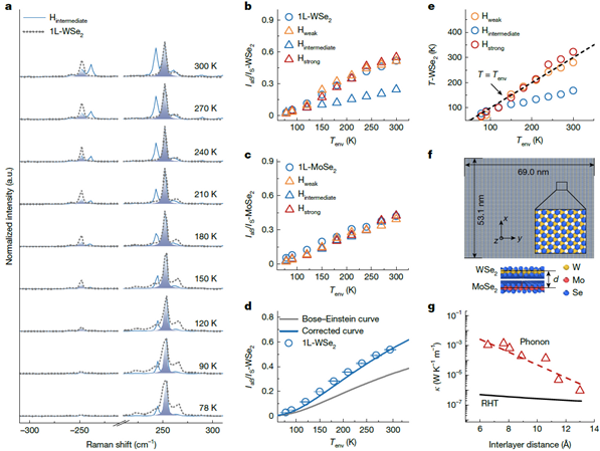
Figure 2 | Raman thermometry and environment-dependent cooling behaviour
To obtain the localized lattice temperature, the team conducted systematic Raman thermometry calibration and measured the component temperature in different heterostructures. Environment-dependent cooling behavior (Figure 2) was studied, confirming an extremely high temperature gradient across the sub-nanometer interlayer scale. Combined with molecular dynamics simulation, the team revealed an exponential dependence of interfacial thermal resistance on interlayer distance, providing a theoretical reference for understanding how microscopic coupling state differences help sustain the interlayer temperature gradient.
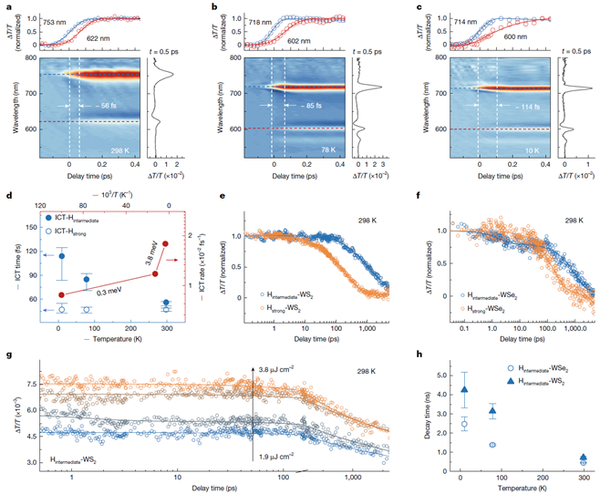
Figure 3 | Phonon-mediated charge separation and recombination behaviour in heterobilayers with different interlayer coupling strengths
Regarding the microscopic kinetic mechanism, verifying whether the cross-interface charge transfer involves phonon participation is central to this hypothesis (Figure 3). The research team utilized pump-probe transient absorption spectroscopy to track the temperature-dependent ultrafast interlayer charge transfer and carrier recombination dynamics in the WSe2/WS2 system. As the temperature decreased from 298 K to 10 K, the charge transfer time increased from approximately 56 fs to 114 fs. This temperature-dependent kinetic behavior indicates the presence of an apparent energy barrier in the interfacial charge transfer process, which requires the consumption of phonons, i.e., absorption of heat. Simultaneously, the extremely high efficiency of charge transfer effectively suppresses heating from the intralayer non-radiative relaxation of hot carriers.
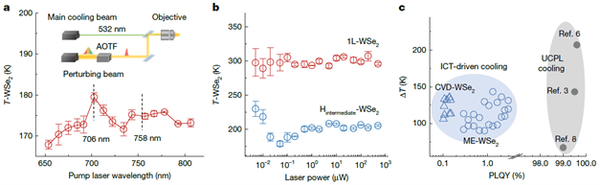
Figure 4 | Excitation and material tolerance of ICT optical refrigeration
In contrast to the traditional laser cooling mechanism based on UCPL, ICT-driven optical cooling exhibits a high degree of freedom regarding excitation conditions and material tolerance (Figure 4). Dual-beam perturbation experiments and power-dependence tests demonstrated that this mechanism breaks free from the reliance on precisely tuned resonant excitation, maintaining the cooling effect over a broad range of wavelengths and power levels. It also bypasses the stringent requirements for high photoluminescence quantum yield (PLQY). Even in chemical vapor deposition (CVD)-grown WSe2 samples with a PLQY of only about 0.1%, the Raman spectra still exhibited a low-temperature feature.
This research successfully verified the scientific feasibility of ICT-driven optical cooling as an alternative to up-conversion photoluminescence cooling in 2D semiconductor systems. It expands the thermal energy extraction pathway to non-radiative channels, providing a new direction for developing cryogen-free thermal management systems for micro/nano-optoelectronic and quantum devices.
Jiamin Lin (Ph.D. student at Nanjing University), Baixu Xiang and Renguang Liu (Ph.D. students at Tsinghua University), and Jinyang Ling (Ph.D. student at Nanjing University) are the co-first authors of the paper. Prof. Weigao Xu from Nanjing University, and Prof. Qihua Xiong and Prof. Huajian Gao from Tsinghua University are the co-corresponding authors. The teams of Junhao Lin from Southern University of Science and Technology, Qi Zhang from Southeast University, Xingzhi Wang from Xiamen University, and Wei Wang and Changjin Wan from Nanjing University provided support in cross-sectional spherical aberration-corrected electron microscopy characterization, photoluminescence quantum efficiency testing, data analysis, and mechanism discussions, respectively. This work was supported by the State Key Laboratory of Analytical Chemistry for Life Science, the Key Laboratory of Mesoscopic Chemistry of MOE, School of Chemistry at Nanjing University, and funded by the National Key R&D Program of China, the National Natural Science Foundation of China, and the New Cornerstone Science Foundation, among others.