
Glycans are ubiquitous in nature and play crucial roles in biological processes. Deciphering their complex and branched structures is essential for understanding their functions. Traditional analytical methods face limitations in resolving glycan structures. For instance, mass spectrometry has restricted ability in distinguishing glycan isomers, and nuclear magnetic resonance spectroscopy for glycans is extremely complex to interpret.
Nanopore is an emerging single-molecule sensor widely used for DNA and RNA sequencing. The success of nanopores in nucleic acid sequencing has inspired the development of nanopore sequencing for proteins and glycans. However, due to the structural complexity of glycans, the advancement of nanopore glycan sequencing has lagged significantly. Current research on nanopore sugar analysis focuses on sensing and distinguishing a limited number of sugars, yet a universal, high-resolution nanopore glycan analysis method has not been proposed.
Recently, Professor Shuo Huang’s research group from our institute proposed an innovative “fragment assembly” nanopore glycan sequencing platform based on a phenylboronic acid (PBA)-modified Mycobacterium smegmatis porin A nanopore (MspA-90PBA). This platform features high universality, high resolution, and label-free identification, enabling high-precision analysis of complex glycan structures. First, MspA-90PBA can detect structures ranging from monosaccharides to polysaccharides and branched glycans. Using this sensing data, the authors constructed a nanopore glycan database (Figure 1A) and a classification model (Figure 1B), which achieved 94.1% recognition accuracy for glycan nanopore events in the database. For fragment-based glycan sequencing, accurate identification of characteristic glycan fragments is essential. By hydrolyzing glycans into fragments using glycosidases and performing searches against the nanopore glycan database, individual fragment components can be identified, allowing reconstruction of the full glycan sequence (Figure 1C). Using this approach, the authors successfully performed fragment assembly nanopore sequencing on raffinose, stachyose, and verbascose (Figure 1D–J).
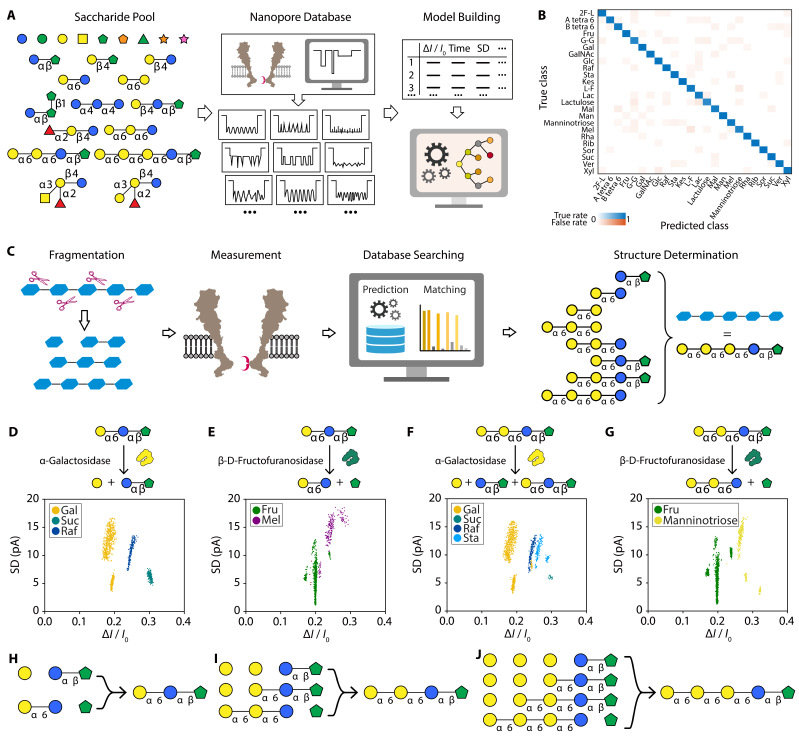
Figure 1.The construction and application of the “Fragment Assembly” nanopore glycan sequencing platform based on MspA-90PBA.
The study, entitled “Nanopore profiling and structure determination of oligosaccharides by fragmentation”, was published in Science Advances on January 1, 2026. Prof. Shuo Huang from our institute is the corresponding author of the paper. Yunqi Xiao (Ph.D. candidate) and Shanyu Zhang (Ph.D. graduate) are co-first authors of the paper.
This research was supported by the State Key Laboratory of Analytical Chemistry for Life Science and the Nanjing University Chemistry and Biomedicine Innovation Center (ChemBIC). Funding was provided by the National Key R&D Program of China (Grant No. 2023YFF1205900), the National Natural Science Foundation of China (Grant Nos. 22225405), the Fundamental Research Funds for the Central Universities (Grant No. 020514380336), and the State Key Laboratory of Analytical Chemistry for Life Science (Grant No. 5431ZZXM2509).