
Lithium-sulfur (Li-S) batteries are recognized as among the most promising energy storage devices, offering a considerable energy density of 2600 Wh kg-1 due to the ultrahigh theoretical specific capacity of sulfur cathodes (1675 mAh g-1). However, several major technical issues still hinder the practical application of Li-S batteries, including the insulating nature of sulfur and Li2S, the “shuttle effect” caused by the diffusion of soluble polysulfides, and large volume changes during the lithiation/delithiation process.To address these challenges, Professor Cheng-Hui Li’s group, in collaboration with Professor Zhong Jin’s group and Professor Shuai Yuan’s group, drew inspiration from Metal‒organic frameworks (MOFs).They designed and synthesized of a 3D MOF, named Zr-MTAC, by incorporating azo-functionalized ligands with Zr-oxo clusters, which can serve as a sulfur host material for high-performance Li-S batteries (Figure 1).
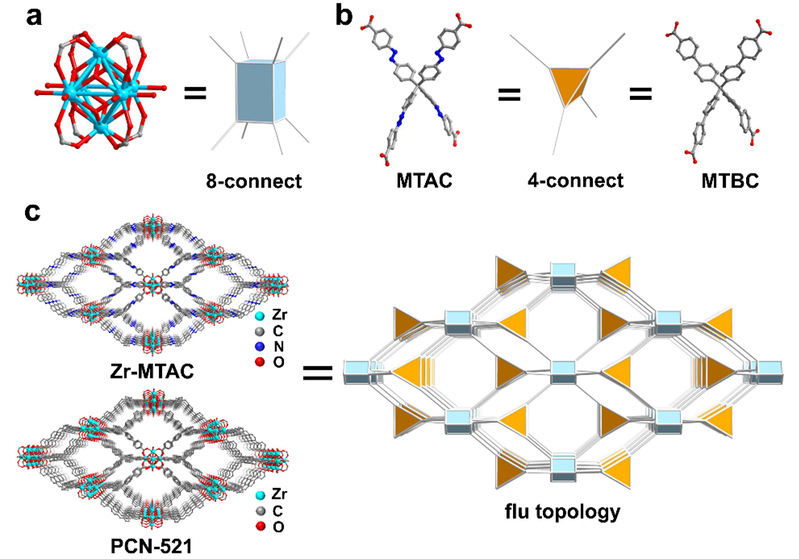
Figure 1. Schematic representation of the design of MOFs.
Successful synthesis, phase purity, and structural stability (across diverse solvents and pH conditions) of Zr-MTAC (azo-functionalized) and PCN-521 are confirmed via comprehensive characterizations, including PXRD (matching simulated patterns), FT-IR/Raman (verifying azo groups in Zr-MTAC), TEM (confirming crystalline structure), SEM-EDX (uniform element distribution), and XPS (defining chemical compositions and valence states) (Figure 2).Zr-MTAC demonstrates superior polysulfide conversion kinetics compared to PCN-521, supported by electrochemical tests: cyclic voltammetry reveals prominent redox peaks and enhanced reactivity; potentiostatic measurements show higher Li2S nucleation/dissolution currents and shorter response times; Tafel plots indicate higher exchange current density; shuttle current tests confirm effective suppression of polysulfide shuttling; and linear fitting of CV data yields faster Li⁺ diffusion coefficients (Figure 3).Li-S batteries integrated with S@Zr-MTAC cathodes outperform PCN-521-based counterparts in key electrochemical performances: they deliver higher reversible discharge capacities, lower potential hysteresis, and exceptional cycling stability (retaining 699.4 mAh g-1 after 1000 cycles at 1.0 C with a mere 0.037% per cycle capacity decay). Additionally, S@Zr-MTAC exhibits superior rate capability, maintaining 856.5 mAh g-1 at 4.0 C and recovering well when the current rate returns to 0.5 C, validating its potential for high-performance Li-S batteries (Figure 4).
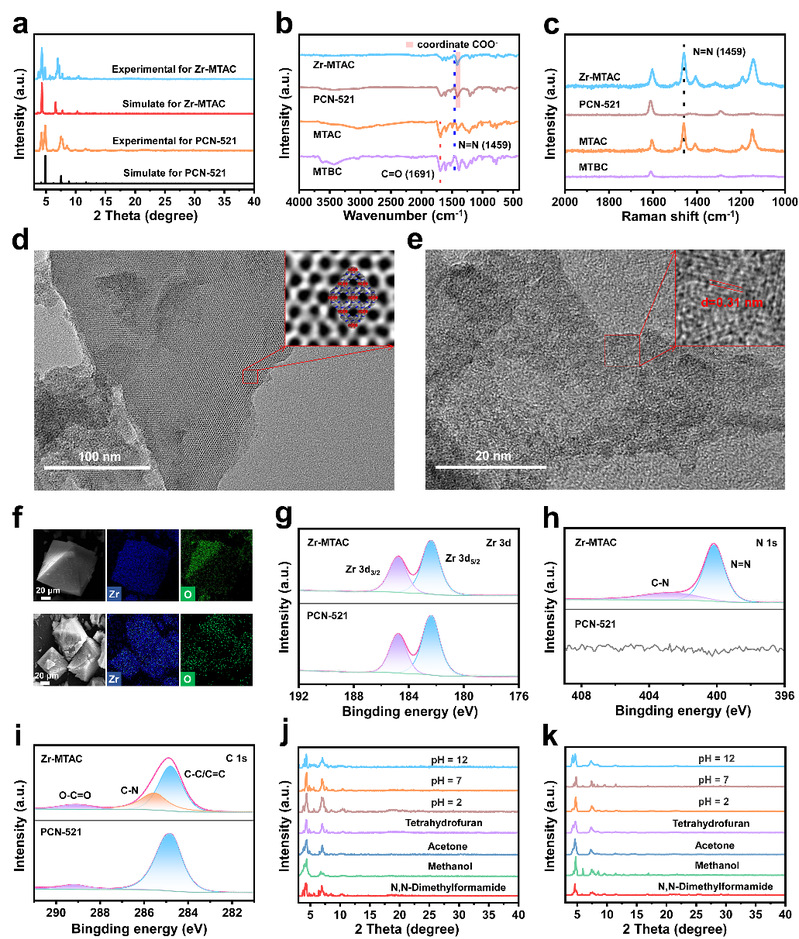
Figure 2. Structural and compositional characterizations of Zr-MTAC and PCN-521.
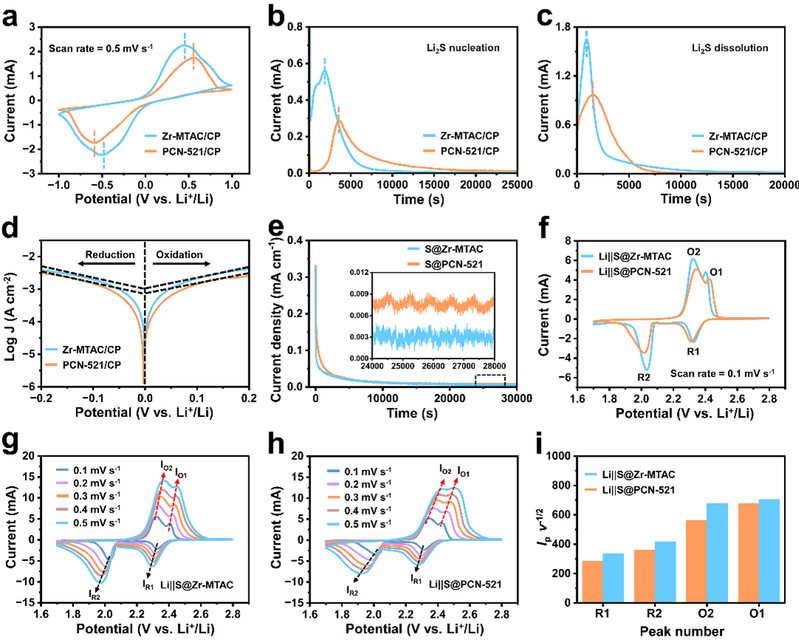
Figure 3.Electrochemical kinetics evaluations for Zr-MTAC and PCN-521 as the host materials of sulfur cathodes.
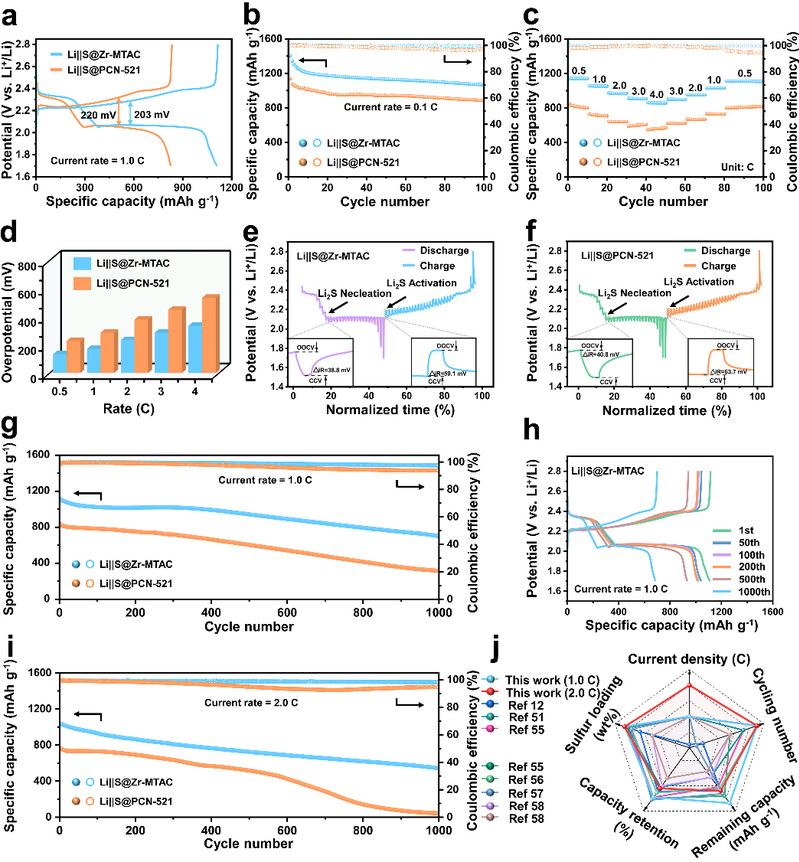
Figure 4.Electrochemical kinetics evaluations for Zr-MTAC and PCN-521 as the host materials of sulfur cathodes.
Stronger chemical adsorption of polysulfides by Zr-MTAC than PCN-521 is confirmed via UV-vis spectroscopy (nearly colorless solution post-adsorption) and XPS (Li-N bond formation, binding energy shifts of S 2p and N 1s). DFT calculations demonstrate Zr-MTAC’s higher binding energies for Li2S6/Li2S4 and all lithiation-stage LiPSs. Gibbs free energy analysis reveals Zr-MTAC reduces the reaction energy barrier for polysulfide reduction, especially accelerating the rate-determining step (Li2S2→Li2S). These results verify that Zr-MTAC suppresses the polysulfide shuttle effect through the synergistic action of azo groups and Zr-oxo clusters.
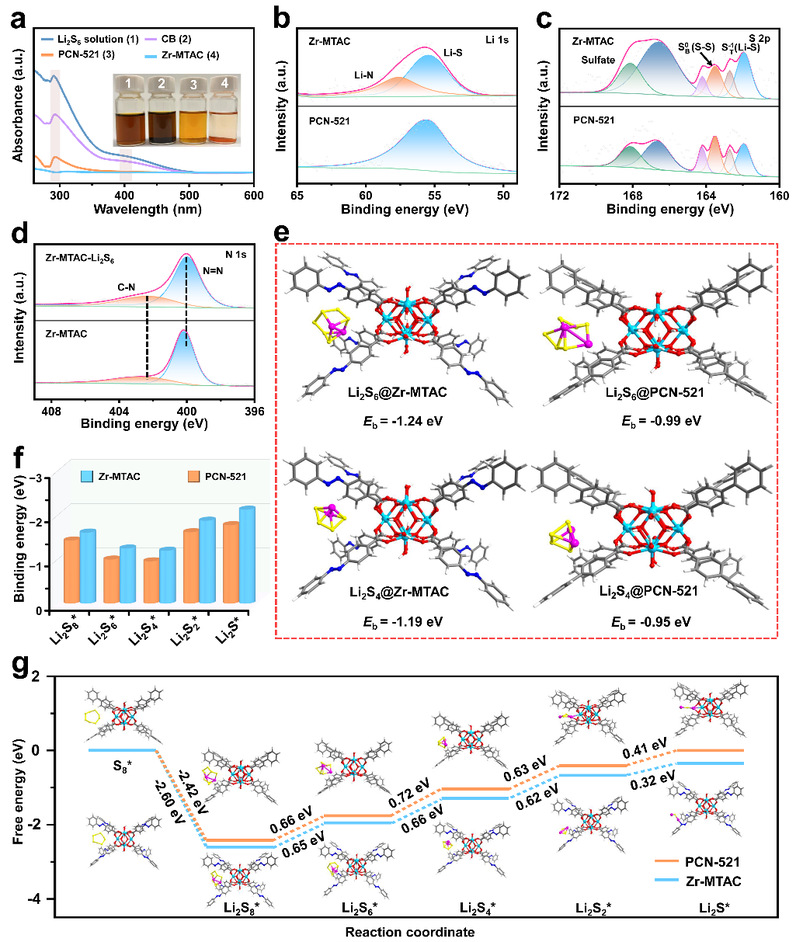
Figure 5.Chemical adsorption behaviors and DFT-calculated reaction pathways of Zr-MTAC and PCN-521 for polysulfide conversion.
This work represents a significant advance in applying azo-functionalized MOF to Li-S batteries.The incorporated azo groups not only enable effective capture of polysulfides but also function as electron transport channels to accelerate the nucleation/dissolution of solid-state Li2S. The synergistic effect of azo groups and Zr-oxo clusters has been proven to reduce the reaction energy barrier on the cathodic side and promote the catalytic conversion of polysulfides.This work highlights the enormous potential of azo-functionalized MOF materials in developing energy storage devices, providing a practical and feasible solution for high-performance Li-S batteries.
This work entitled “Azo-Bridged Metal-Organic Frameworks with Robust Zr6-Cluster Nodes: A Dual-Functional Design for Suppressing Polysulfide Shuttling in Lithium-Sulfur Batteries” was published in “Journal of the American Chemical Society” (DOI: 10.1021/jacs.5c16469). MS student Wei Meng and PhD student Yaoda Wang are co-first authors of the paper, while Professor Cheng-Hui Li, Professor Zhong Jin, Professor Shuai Yuan and associate researcher Pei-Chen Zhao are co-corresponding authors.This work was supported by the National Natural Science Foundation of China, the Fundamental Research Funds for the Central Universities, the General project of the Joint Fund of Equipment Pre-research and the Ministry of Education, the Scientific and Technological Innovation Special Fund for Carbon Peak and Carbon Neutrality of Jiangsu Province, the Scientific and Technological Achievements Transformation Special Fund of Jiangsu Province, the International Collaboration Research Program of Nanjing City and the Gusu Leading Talent Program of Scientific and Technological Innovation and Entrepreneurship of Wujiang District in Suzhou City.