
In nature, amino acids predominantly exist in their left-handed (L) enantiomeric forms, whereas right-handed (D) amino acids have long been regarded as “non-proteinogenic” counterparts. In fact, D-amino acids are widely distributed in biological systems. They are not only key components of the peptidoglycan layer in Gram-positive bacteria but also participate in the formation of bioactive molecules such as short peptides, antibiotics, and toxins. In recent years, mirror-image peptides and proteins have attracted increasing attention as promising therapeutic molecules and catalytic tools, owing to their resistance to enzymatic degradation and exceptional biological stability. Therefore, accurate identification of D-amino acids is not only crucial for drug development but also provides an important opportunity to explore the mirror-image molecular world in biological systems.
Recently, Prof. Shuo Huang’s research group at our institute reported a groundbreaking study in which they developed a nickel ion–nitrilotriacetic acid–modified Mycobacterium smegmatis porin A nanopore (MspA-NTA-Ni) capable of simultaneous discrimination of all chiral amino acids. This achievement represents the first nanopore sensor in the world capable of fully distinguishing all 39 amino acid enantiomers. The nanopore can recognize all 19 D-amino acids along with achiral glycine (Figure 1) with an accuracy of 99.5%. Furthermore, this strategy was successfully applied to the compositional analysis of D-peptides, demonstrating its utility for identifying D-peptide constituents.
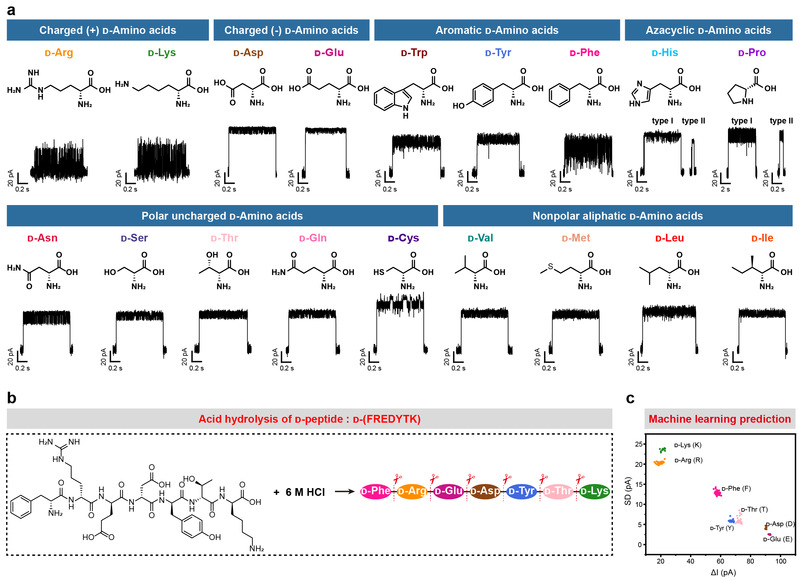
Figure 1. Simultaneous discrimination of all D-amino acids and identification of D-peptide components by the MspA-NTA-Ni nanopore.
Remarkably, this technique enables the simultaneous detection of all 39 amino acid enantiomers (Figure 2) with an overall precision of 98.9%. In addition, molecular dynamics simulations were performed to investigate the molecular motions of L- and D-amino acids inside the nanopore. The combined experimental and simulation results confirm the ultrahigh chiral resolution of the MspA-NTA-Ni nanopore toward amino acids. This method not only allows direct characterization of DL-amino acid mixtures but also provides a key sensing component for future nanopore-based exo-sequencing of D-peptides and D-proteins.
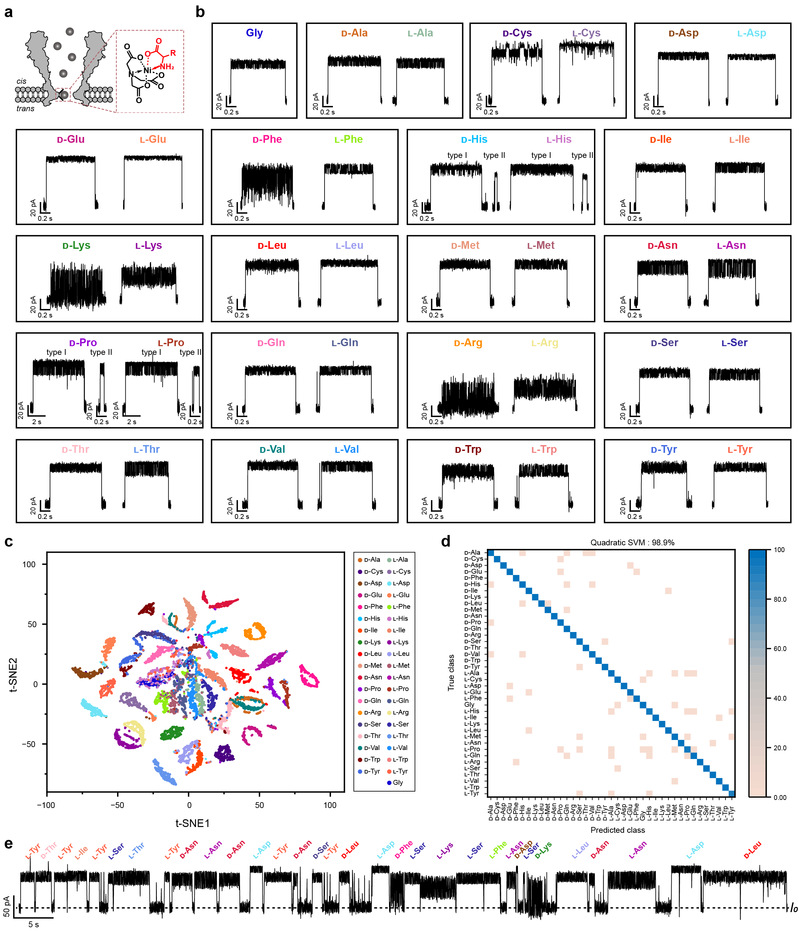
Figure 2. Simultaneous discrimination of all 39 chiral amino acids by the MspA-NTA-Ni nanopore.
The study, entitled “Chiral Discrimination of all Proteinogenic Amino Acid Enantiomers by Nanopore Sensing,” was published in Angewandte Chemie International Edition on October 21, 2025(https://onlinelibrary.wiley.com/doi/10.1002/anie.202515531). Prof. Shuo Huang from our institute and Prof. Wenfei Li from the School of Physics, Nanjing University, served as corresponding authors. Hanhan Zhang (Ph.D. candidate), Kefan Wang (postdoctoral fellow), and Xiao Zhou (Ph.D. candidate) are co-first authors of the paper.
This research was supported by the State Key Laboratory of Analytical Chemistry for Life Science and the ChemBIC Institute of Chemistry and Biomedical Innovation at Nanjing University. Funding was provided by the National Key R&D Program of China (Grant No. 2022YFA1304602), the National Natural Science Foundation of China (Grant Nos. 22225405 and 223B2402), the Fundamental Research Funds for the Central Universities (Grant No. 020514380336), and the State Key Laboratory of Analytical Chemistry for Life Science (Grant No. 5431ZZXM2509).