
Developing materials that can mimic living organisms and autonomously perceive, heal, and provide feedback after injury is a major challenge in the field of materials science. However, traditional self-healing materials often need to make a trade-off between mechanical strength, stability, and repair efficiency, which is difficult to achieve simultaneously. To overcome this bottleneck, Professor Cheng-Hui Li's team has developed a self-diagnosis and self-healing system based on artificial intelligence (AI). They prepared a repairable conductive composite material by incorporating ionic liquid into ordinary thermoplastic (polycaprolactone, PCL). After material damage, the changes in its electrical properties can be accurately perceived by the AI system. When located a damage, the AI system will autonomously initiate local microcurrent heating to melt and seamlessly heal the material. This system has achieved a complete closed-loop of perception-healing-feedback for the first time, completing the conceptual transformation from self-healing to smart-healing, and thus developing a new method for designing and synthesizing self-healing materials.
This work innovatively employs an ionic liquid (IL, [BMIM]TFSI) as a conductive filler incorporated into a commercial thermoplastic polymer matrix, PCL (Figure 1). Unlike conventional rigid inorganic fillers, the liquid-state ionic liquid not only endows the material with excellent ionic conductivity—providing an electrical basis for damage “sensing”—but also forms a dynamic cross-linked network through ion–dipole interactions, ensuring material flexibility. Through systematic experimental optimization, the team found that when the IL content reached approximately 33.3 wt% (IL-PCL-50), the material achieved an optimal balance among mechanical strength, toughness, and conductivity. The material exhibits a melting point around 60 °C, and this thermo-responsive feature enables efficient damage repair via precisely controlled localized heating.
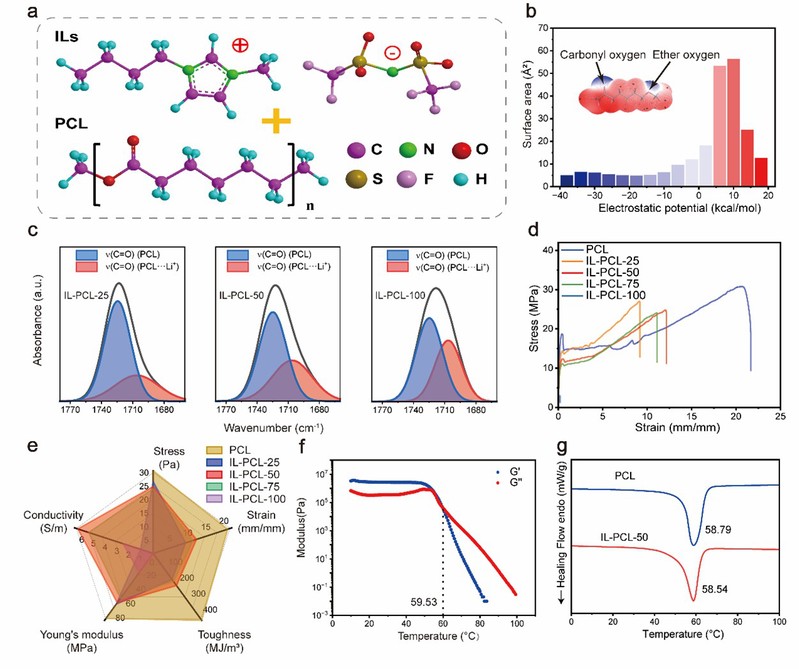
Figure 1. Structure and basic characterizations of conductive self-healing polymers.
The traditional evaluation of repair effectiveness relies on destructive mechanical testing and cannot achieve real-time monitoring. To solve this problem, the team has established an intelligent evaluation strategy. This strategy uses response surface modeling (RSM) to correlate damage characteristics with repair conditions (such as temperature, time) and repair efficiency. Due to the time difference between the recovery of material conductivity and mechanical strength, the team also introduced a scaling factor for calibration, enabling the system to accurately infer the true degree of mechanical performance recovery through non-destructive electrical measurements alone. Ultimately, based on this model, AI can intelligently calculate the optimal repair plan (required voltage and heating time) for different degrees of damage, achieving the best repair effect in the most efficient way (η>99%), and achieving a leap from passive repair to intelligent decision-making (Figure 2).
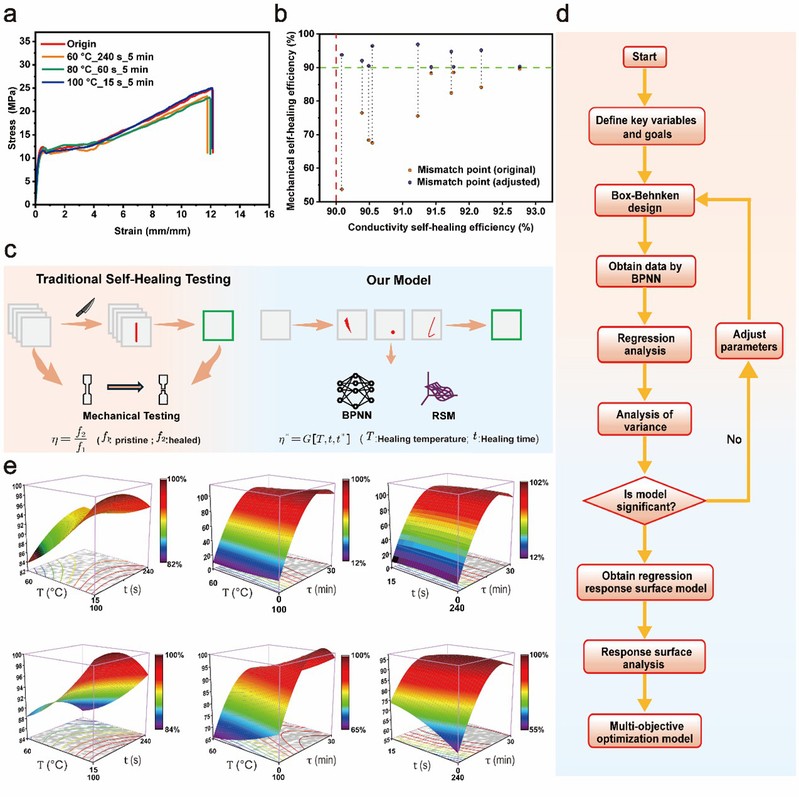
Figure 2. Healing performance of materials and RSM.
In order to endow the material with precise pain sensation, the team has developed a high-sensitivity eight port impedance measurement method. This method can collect 28-dimensional complex impedance vectors on the surface of materials, like a precise 'neural sensing network', which can capture weak electrical signal changes caused by damage in real time. These high-dimensional data are input into a backpropagation neural network (BPNN) model trained through deep learning. This AI model plays the role of the system's brain and can decode the precise spatial coordinates of damage from complex electrical signals fingerprints. Its prediction accuracy is as high as R²=0.987 (x coordinate) and R²=0.977 (y coordinate), providing reliable navigation for subsequent precise treatment.
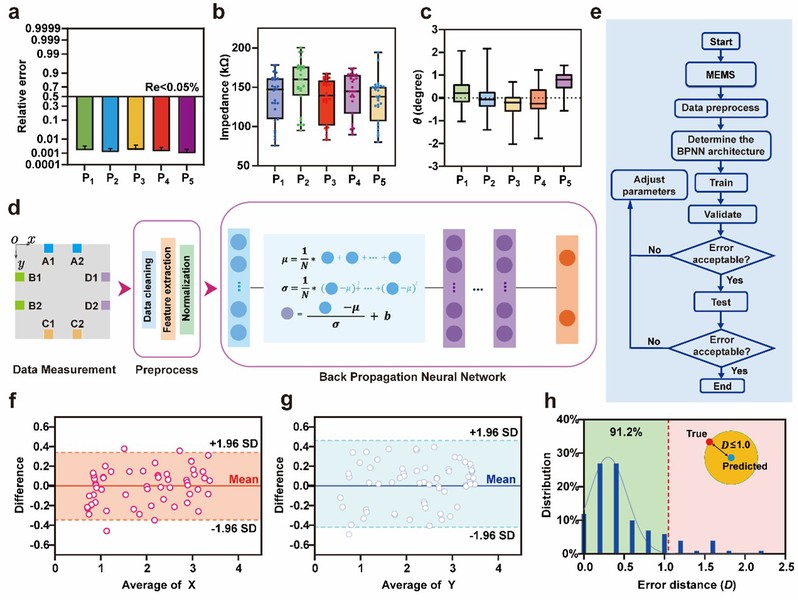
Figure 3. The mechanism of damage perception and healing based on impedance measurement and deep learning neural network.
After the AI brain issues repair instructions, the system enters an efficient self-execution stage. A selective heating resistor array integrated with the material will accurately activate the micro heating units corresponding to the damaged area based on the positioning results of AI. The Joule heating effect causes the local temperature to rapidly exceed the melting point of the material in a short period of time, prompting the polymer chains to re flow and fuse, thus completing seamless repair within seconds to minutes. This targeted therapy repair method greatly improves energy utilization efficiency. During the repair process, the system will continuously monitor impedance and provide data feedback to AI for real-time efficacy evaluation. Once the AI determines that the material has fully healed (classification accuracy>90%), it will automatically cut off the heating and complete a complete perception decision execution feedback intelligent closed-loop. The entire process does not require any human intervention, truly achieving unmanned and autonomous intelligent healing.

Figure 4. Fabrication and demonstration of self-diagnosing and self-healing system.
In summary, this work successfully constructed a fully autonomous intelligent repair system by deeply integrating cutting-edge technologies of materials science and artificial intelligence. It not only solves the key bottleneck of traditional self-healing materials, but also proposes a new intelligent material design paradigm. The high precision, high efficiency, and fully autonomous characteristics exhibited by this system make it have enormous potential for application on unmanned platforms in extreme environments that are difficult for humans to intervene in, such as deep sea and outer space, providing an important theoretical basis and technical framework for the development of the next generation of intelligent autonomous materials.
The related achievements were published in Advanced Materials entitled From Self-Healing to Smart-Healing: A Self-Diagnosis and Self-Healing System Based on Artificial Intelligence (DOI: 10.1002/adma.202513641). Wen-Lin Luo, Yao-Yao Xu, and Xiong Cheng are co-first authors of the article, and Cheng-Hui Li, Xiao-Dong Huang, Wen-Hua Gu are the corresponding author. This work was supported by the National Natural Science Foundation of China.