
Unlike conventional energy storage technologies, electrochemical energy storage systems offer rapid response times and high efficiency without geographical constraints, positioning them as a compelling solution for large-scale energy storage applications. Among existing electrochemical energy storage technologies, aqueous organic redox flow batteries (AORFBs) emerge as a particularly appealing option for their distinctive decoupled cell design and excellent scalability. To enhance the solubility of AORFBs, numerous solubilization modification strategies for organic active molecules have been developed.Ferrocene, a widely used organic active material in AORFBs, exhibits ideal redox potentials and exceptional chemical stability, making it a preferred choice for catholyte applications. Structural diversification of ferrocene molecules can be achieved through targeted functional group modifications. Current solubilization strategies predominantly rely on the grafting of quaternary ammonium salt moieties onto the molecular backbone. However, these conventional approaches present significant limitations, including multi-step synthetic pathways, labor-intensive purification processes, and suboptimal yields.Sugars, also referred to as carbohydrates, are omnipresent and indispensable nutrients in organisms. Carbohydrates possess the exceptional hydrophilicity stemming from their polyhydroxyl structure. Notably, their solubilizing feature extends across diverse pH environments, making them an attractive candidate as molecular functionalization reagent. However, to date, the exploitation of saccharide moieties as solubilizing auxiliaries remains conspicuously absent from the extant literature.
To address these challenges, the research team led by Prof. Zhong Jin from the School of Chemistry and Chemical Engineering and Institute of Green Chemistry & Engineering at Nanjing University proposed a biomimetic glycosylation strategy. Under mild conditions, two glucose groups were grafted onto ferrocene via thioetherification reactions. This molecular engineering breakthrough yielded a polyhydric ferrocene derivative (Fc(Thio-Glc)2) with exceptional water solubility (1.3 M) and remarkable redox reversibility. Molecular dynamics simulations were conducted to elaborate a thorough analysis of the changes in the number of hydrogen bonds among components in the Fc(Thio-Glc)2 system. The multitudinous highly polar hydroxyl moieties in Fc(Thio-Glc)2spontaneously form hydrogen bonding networks with water molecules, and the cyclic architecture of monosaccharide side-groups maximizes the exposure of polar functionalities, creating all-around hydrophilic domains that facilitate the formation of stable hydration shells with water molecules. These hydration shell effectively reduce the dimerization of the cyclopentadienyl ligands and significantly enhance the molecular stability and electrochemical reversibility. Consequently, the as-fabricatedR-Vi||Fc(Thio-Glc)2AORFB, with a 0.5 M Fc(Thio-Glc)2 catholyte, exhibited a minimal capacity fade rate of 0.005% per cycle or 0.18% per day over 400 cycles. During the entire cycling process, the Coulombic efficiency maintained a near-perfect 100%, while the energy efficiency surpassed 70%. This study highlights the transformative potential of glycosylation-based molecular engineering in designing redox-reversible and electrochemically robust organic molecules, paving the way for next-generation sustainable energy storage solutions. This work has been published in the Journal of the American Chemical Society on October 7, 2025, under the title Nature-Inspired Glycosylation Strategy Enabled Hydrosoluble Polyhydric Thioalkylated Ferrocene Derivatives for pH-Neutral Aqueous Redox Flow Batteries. The full-text publication is accessible at: https://pubs.acs.org/doi/10.1021/jacs.5c11833. The first author of the work is Guochun Ding.
1. Synthesis route and electrochemical performance of Fc(Thio-Glc)2
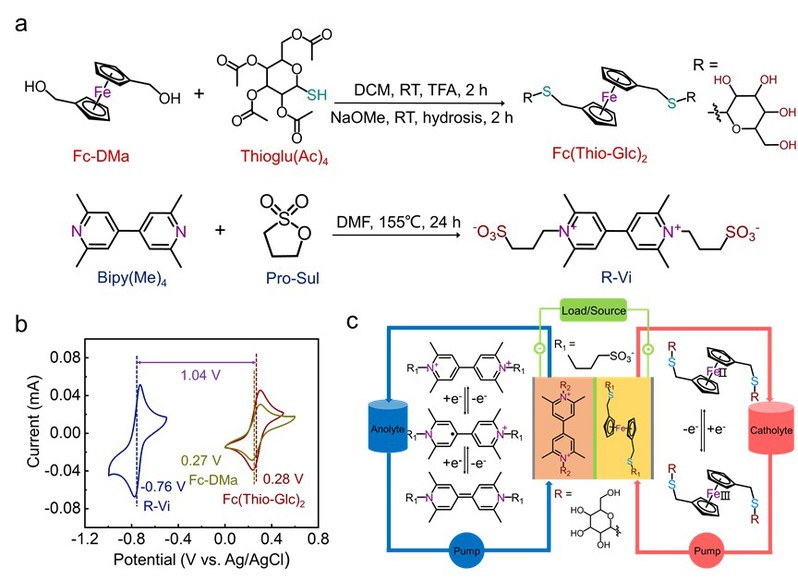
Figure 1. The synthesis route of Fc(Thio-Glc)2 and structural configuration of R-Vi||Fc(Thio-Glc)2 AORFBs.
The highly soluble polyhydric ferrocene derivative Fc(Thio-Glc)2 was successfully synthesized through thioetherification reactions followed by deprotection and hydrolysis steps. Experimental results demonstrate that Fc(Thio-Glc)2 exhibits a remarkable solubility of 1.3 M in 1.0 M KCl solution, representing a 37-fold increase compared to the original Fc-DMa (0.035 M). This dramatic enhancement is attributed to the extensive hydrogen-bonding interactions between multiple hydrophilic hydroxyl groups and water molecules. Electrochemical characterization reveals that Fc(Thio-Glc)2 exhibits a redox potential of -0.28 V vs. Ag/AgCl, showing a positive shift of nearly 100 mV compared to Fc-DMa. When paired with the bis(3-sulfonatopropyl)-2,2’,6,6’-tetramethyl-4,4’-bipyridine anolyte (R-Vi), the AORFB achieves an open-circuit voltage exceeding 1.0 V.
2. Molecular dynamics simulations, molecular orbitals with energy gaps and electrostatic potentials
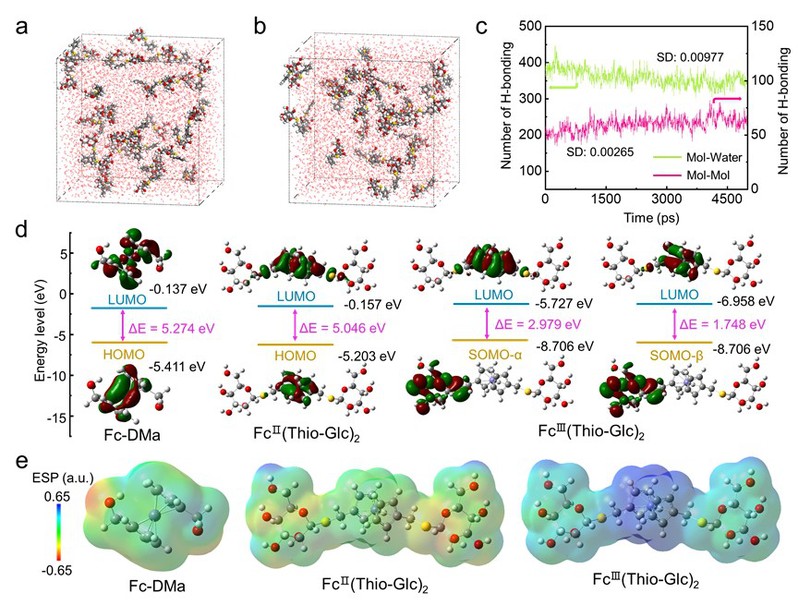
Figure 2. The molecular dynamics simulations of Fc(Thio-Glc)2 in water and its analysis of electronic structure.
Molecular dynamics simulations revealed the dynamic hydration behavior of Fc(Thio-Glc)2 in aqueous solution. The analysis shows that those hydrogen bonds between Fc(Thio-Glc)2 molecules increase, while those between the molecules and water decrease, leading to noticeable molecular aggregation and reduced interfacial contact area with water. The highest occupied molecular orbital (HOMO) and lowest unoccupied molecular orbital (LUMO) energy levels studies demonstrate that the glycosylation strategy effectively narrows the energy gap between FcⅡ(Thio-Glc)2 and FcⅢ(Thio-Glc)2 compared to Fc-DMa, while also increasing the negative electrostatic potential of these derivatives. These effects stem from the introduction of multiple hydroxyl groups, which enhance molecular polarity, promote hydrogen bonding with water, and ultimately lead to significantly improved solubility. The findings provide valuable molecular-level insights into the effectiveness of glycosylation strategy in optimizing redox-active materials for energy storage applications.
3. Long-cycling performance of AORFB based on low concentration of Fc(Thio-Glc)2
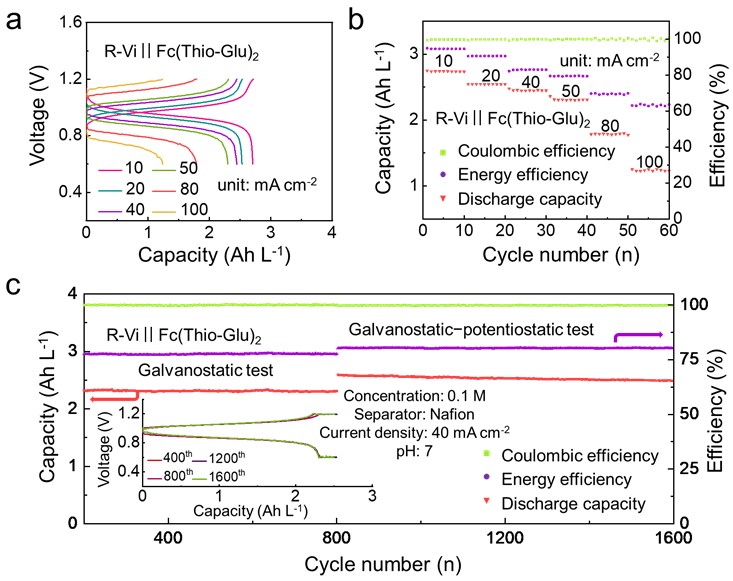
Figure 3. The electrochemical performance of Fc(Thio-Glc)2 at low concentration.
The electrochemical performance of 0.1 M R-Vi||Fc(Thio-Glc)2 AORFB was comprehensively evaluated through galvanostatic cycling tests. Remarkably, the AORFB maintained stable discharge capacity of 2.4 Ah L-1 after 800 cycles without observable capacity decay. In galvanostatic-potentiostatic cycling mode, the AORFB demonstrated an exceptionally low capacity decay rate of merely 0.0023% per cycle. Throughout the entire cycling process, the AORFB consistently achieved near-perfect Coulombic efficiency (≈100%) and energy efficiency (>75%).
4. Long-cycling performance of AORFB based on high concentration of Fc(Thio-Glc)2 and its stability test
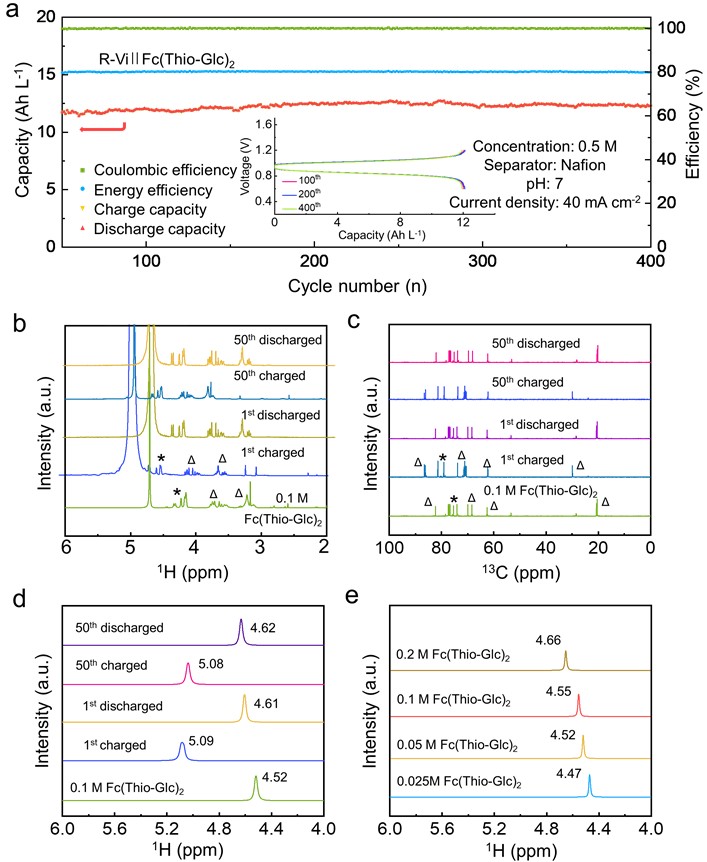
Figure 4. The electrochemical performance of Fc(Thio-Glc)2 at high concentration and its NMR analysis.
The electrochemical performance of 0.5 M R-Vi||Fc(Thio-Glc)2 AORFB was systematically investigated. The AORFB delivered a discharge capacity of 11.92 Ah L-1 and maintained remarkable cycling stability with a low capacity fade rate of 0.005% per cycle (equivalent to 0.18% per day) over 400 cycles, while consistently achieving near-perfect Coulombic efficiency (≈100%) and energy efficiency (>80%). To further elucidate the electrochemical behaviors of Fc(Thio-Glc)2 catholyte, No-D 1H and 13C NMR analyses were employed to monitor the structural stability of Fc(Thio-Glc)2 during cycling. The proton peaks exhibited broadening and downfield shifts upon charging, returning to their original positions during discharging. The carbon signals also showed similar reversible variations. Notably, water proton peaks shifted from 4.47 ppm to 4.66 ppm across various concentrations (0.025–0.2 M), confirming the presence of hydrogen-bonding interactions between Fc(Thio-Glc)2 and water molecules.
5. Analysis of capacity decay mechanism ofFc(Thio-Glc)2
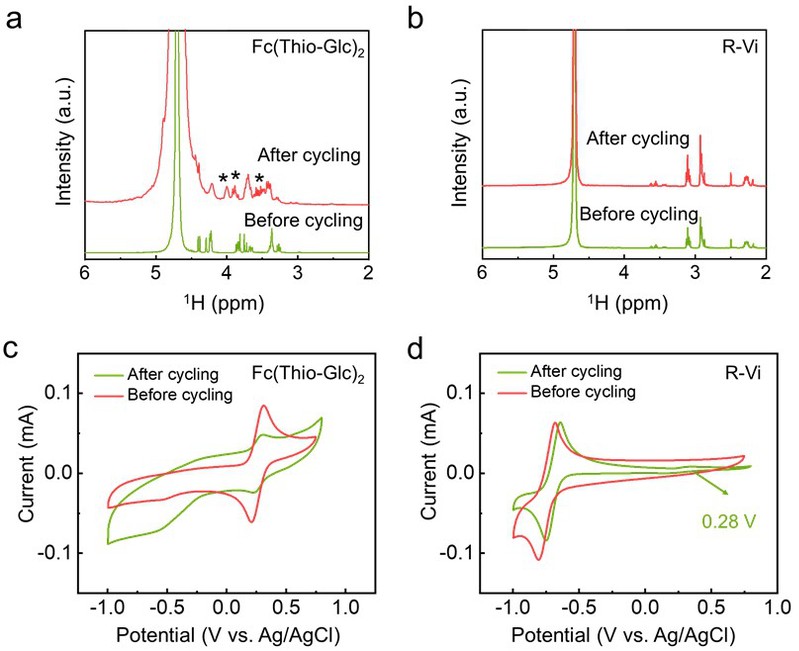
Figure 5. The analysis of capacity decay mechanism ofFc(Thio-Glc)2.
To elucidate the potential performance attenuation mechanism of Fc(Thio-Glc)2 during cycling, the 1H NMR spectra of Fc(Thio-Glc)2 catholyte and R-Vi anolyte were analyzed after 400 galvanostatic cycles. For Fc(Thio-Glc)2 catholyte, some newly proton peaks emerged between 3.0–4.5 ppm (marked as “*”), suggesting a small portion of solubilizing group detachment from ferrocene core and the dimers of cyclopentadiene. Meanwhile, the 1H NMR spectra of R-Vi anolyte remained almost unchanged. Post-cycle CV curves of Fc(Thio-Glc)2 catholyte and R-Vi anolyte after cycling were also collected. Conversely, a prominent oxidation/reduction peak at 0.28 V emerged in the CV curve of the R-Vi anolyte after cycling, corroborating the slight crossover of Fc(Thio-Glc)2 molecules.
6. Summary and prospect:
This study implemented a biomimetic glycosylation strategy by incorporating natural sugar moieties as solubilizing side chains, enabling the successful synthesis of a water-soluble polyhydroxy ferrocene derivative (Fc(Thio-Glc)2). The remarkable enhancement in aqueous solubility was achieved through extensive hydrogen-bonding interactions between the polar hydroxyl groups and water molecules. Theoretical simulations revealed the critical role of hydrogen-bond networks in modulating molecular conformation and solvation behavior, while spectroscopic analyses confirmed the exceptional redox reversibility and long-term cycling stability.By demonstrating the transformative potential of biomimetic strategies in designing stable redox-active molecules, this work provides novel insights for developing sustainable and high-efficiency AORFBs.
The work is supported by the National Natural Science Foundation of China, the Equipment Pre-Research and Ministry of Education Joint Fund, the Fundamental Research Program Key Project of Jiangsu Province, the Natural Science Foundation of Jiangsu Province, the Science and Technology Major Project of Jiangsu Province, the Scientific and Technological Achievements Transformation Special Fund of Jiangsu Province, the Academic Degree and Postgraduate Education Reforming Project of Jiangsu Province, the Key Core Technology Open Competition Project of Suzhou City, the Open Research Fund of Suzhou Laboratory, and the Chenzhou National Sustainable Development Agenda Innovation Demonstration Zone Provincial Special Project.