|
Long Yitao
|
 |
|
Personal Profile
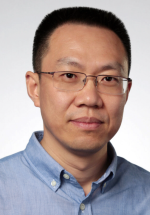
Yi-Tao LONG, Chang Jiang Scholar. He received his BS degree (1989) in chemistry from Shandong University, MS degree (1996) and Ph.D. degree (1998) in bio-electroanalytical chemistry from Nanjing University. After completing 2 years postdoctoral study at Heidelberg University, he worked as a Research Scientist at University of Saskatchewan and University of Alberta, Canada. From 2006 to 2007, he worked as an Associate Specialist at University of California, Berkeley. Then, he was appointed as a professor at East China University of Science and Technology to start his independent research. He is now a full professor in School of Chemistry and Chemical Engineering at Nanjing University (2019-). He has been an honorary visiting professor at University of Birmingham (2014-2020), visiting professor at University of Bath (2011-) and University of Western Ontario (2014-). His main research expertise involves electrochemical analysis, spectroelectrochemistry, nanopore, single-molecule analysis, bio-interfaces, and integrated biosensors. He has published more than 280 peer-reviewed papers, including Nat. Nanotechnol., Nat. Methods., Nat Commun., Nat Protoc., J. Am. Chem. Soc., Angew. Chem. Int. Ed, 5 books/chapters and he holds 34 China national patents and 2 international patents. He is an elected Fellow of the Royal Society Chemistry and an Associate Editor of the journal Chemical Science, Reaearch and Chemical Journal of Chinese Universities. He serves as editorial board member for Microchimica Acta, Theranostics, ChemElectroChem. For our lab website, please visit: http://hysz.nju.edu.cn/ytlong/ Show All
Work Experience
2019-present Professor, Skate Key Laboratory of Analytical Chemistry for Life Science, School of Chemistry and Chemical Engineering, Nanjing University, CHINA 2007-2018 Distinguished Professor, Dean(2017-2019), School of Chemistry & Molecular Engineering, East China University of Science and Technology, Shanghai, CHINA 2006-2007 Senior Research Scientist, University of California, USA 2001-2006 Research Associate, University of Saskatchewan and University of Alberta, CANADA 1999-2001 Postdoctoral Fellow, Heidelberg University, GERMANY Show All
Research
Nanopore Electrochemistry 1.Single Biomolecule interface Membrane protein containing various amino acid residues in the lumen, can be regarded as a single-molecule interface. The cavity accommodates one single molecule at a time and provide a suitable sensing environment for single molecule. To achieve the high temporal and spatial resolution for revealing the heterogenous of single molecules, one of the most important challenge is to construct a functional single-molecule interface. We introduce an approach to construct a single-molecule interface from the aerolysin membrane protein, where substituting each amino acid with desired functional groups could facilitate an optimal interaction between the pore and analyte. This method for constructing a single-molecule interface is controllable, generalized, and highly reproducible, and could be applied to design and precisely construct more functionalized nanopore sensors for specific applications in biosensing. We utilized this method to accurately construct series of functional single-molecule interfaces, which was successfully applied to analyze various biomolecules, monitor the single molecule interaction, and resolve the hidden pathways of single biomolecules in life process. Related Publications: 1. Chan Cao; Yi-Lun Ying; Zheng-Li Hu; Dong-Fang Liao; He Tian; Yi-Tao Long*: Discrimination of Oligonucleotides of Different Lengths with a Wild-type Aerolysin Nanopore, Nat. Nanotech, 2016, 66. 2. Chao Cao, Meng-Yin Li., Nuria Cirauqui, Ya-Qian Wang, Matteo Dal Peraro*, He Tian, Yi-Tao Long*. Nat. Commun. 2018, 9, 2823-2831. Publications
Course Name, Time and Place
Syllabus, Examination Requirements
Teaching Resources
Group
|
