|
Personal Profile
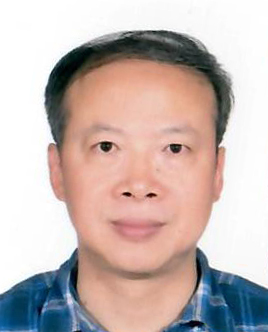
Lin Dong, born in March, 1963 in Sichuan, China, works in Nanjing University as professor, mentor of Ph.D. students and director of modern analysis center Nanjing University. At the same time, he is the director of Jiangsu key laboratory of vehicle exhaust pollution control, Standing Committee Member of Academic Committee of Catalysis Committee of Chinese Rare Earth Society, Vice Chairman of the Research Council of National University Analysis and Testing Center. Professor Dong won the 1st Advanced Prize of Science and Technology in Jiangsu in 2018. Professor Dong received his Ph.D. degree in chemistry from Nanjing University in 1995. From 1995 to 1997, he did his post-doctoral research in School of Physics, Nanjing University. He was promoted to professor in 2002 and accepted tutor of Ph.D. students in 2003. Professor Dong was also a short-term Visiting Research Collaborator in French Academy of Sciences, in 2001, and Tibet University, in 2005. Show All
Work Experience
1997-now: Professor in School of Chemistry and Chemical Engineering, Director of Modern Analysis Center, Nanjing University. 1995~1997: Postdoctoral Research Fellow in Condensed Matter Physics (School of Physics), Nanjing University. 2005.9~2008.5: Professor in School of Chemistry and Chemical Engineering, vice president of School of Chemistry and Chemical Engineering. 2003.2~2003.8:a short-term Visiting Research Collaborator in Tibet University,research on physical chemistry course teaching and scientific research related to environmental protection. 2000~2001: a short-term Visiting Research Collaborator in Water Treatment Laboratory in French Academy of Sciencesis Show All
Research
Research interests focus on the development of environmental catalytic materials and their catalytic elimination of atmospheric molecular pollutants (NO, CO, SO2, VOCs, etc.). Specifically: 1. The preparation of rare earth-based catalysts and supported metal oxide catalysts, their physical and chemical properties, and their basic research in the application of atmospheric molecular pollutants to adsorption, decomposition, and catalytic elimination. 2. Put forward the concept of Surface synergetic oxygen vacancy (SSOV), and explore its mechanism of action in supported two (multi) component catalysts. 3. Carry out basic research on the preparation of morphology and structure-controllable photocatalytic materials and their application in energy and environment. Publications
Course Name, Time and Place
Syllabus, Examination Requirements
Teaching Resources
Group
|