|
Personal Profile
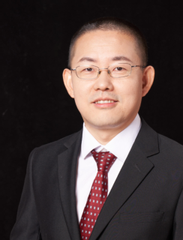
Bin Kang is current a full professor at the School of Chemistry and Chemical Engineering of Nanjing University and a “Youth Yangtze River Scholar” of China. He has a multi-disciplinary education and research background. He graduated with BS in chemistry from Nanjing University of Aeronautics and Astronautics (NUAA), China; a Joint-Ph.D. in materials science from NUAA and Georgia Institute of Technology. He then conducted postdoctoral research in bio-spectroscopy at Georgia Tech and officially joined Nanjing University in 2015. He now leads a multi-disciplinary research team that focuses on chemical imaging and biosensing, committed to early screening of cancer and neurodegenerative diseases. His research areas involve novel nanoprobes, Al-assisted cell spectroscopy, multimodal cell imaging, and nano-photonic devices and instruments. He has published more than 80 papers in high-tier journals, many of them with high citations. He also holds a number of China and US patents, one of which was successfully transformed into practical products (with Zolix Co.). He has close cooperative relationships with many scholars from Russia, Japan, Europe, Australia, etc. He has co-founded the Russia-China-Europe International Laboratory of Nanophotoics for Biomedical Application and served as co-director. He is also a visiting professor at Hokkaido University in Japan. He has a deep insight about the current status and future development of the chemical imaging and biosensing field, and he is always passionate and open-minded to explore new possibilities. Show All
Work Experience
2011-2014, Georgia Institute of Technology, Laser Dynamics Lab, Research Scientist 2015-2016, Nanjing University, School of Chemistry and Chemical Engineering, Researcher 2017-2022 , Nanjing University, School of Chemistry and Chemical Engineering, Associate Professor 2023-present , Nanjing University, School of Chemistry and Chemical Engineering, Professor Show All
Research
Publications
Selected publications: 1.Li-Wen Wu, Pin-Tian Lyu, Ran Zhang, Keng Chen, Li Zuo, Dongliang Song, Zhen-Zhen Feng, Ya-Ting Nie, Xiaodong Cheng, Teng-Xiang Huang*, Bin Kang*, Ning Fang*, Nanoscale correlation of single-molecule reactivity and charge carrier dynamics in a two-dimensional layered InSe photocatalyst. Nature Catalysis, 2026, 9: 87-94 2.Qing-Yue Li, Pin-Tian Lyu, Bin Kang*, Hong-Yuan Chen,Jing-Juan Xu*. Electrochemically modulated interferometric scattering microscopy for imaging ion channel activity in live cells. Nature Photonics, 2025, 19: 871-878 3.Shao-Peng Wang, Pei Song, Hao-Yang Li, Kuan-Yu Ma, Jing-Juan Xu, Hong-Yuan Chen, Bin Kang*. Spaser Nanoprobes Family for Narrow-Band Multiplexed Cell Imaging. Journal of the American Chemical Society. 2025, 147, 15, 12449–12459 4.Pin-Tian Lyu, Hao-Yang Li, Bin Kang*, Hong-Yuan Chen, Jing-Juan Xu, Dynamically Tunable Single-Particle Perovskite Microlaser/Plasmonic Laser in Liquid via Interfacial Chemistry, Laser Photonics Rev. 2025, 2401663 5.Pin-Tian Lyu, Li-Xin Yin, Yi-Ting Shen, Zhaoshuai Gao, Hong-Yuan Chen, Jing-Juan Xu, and Bin Kang*.Plasmonic Cavity-Catalysis by Standing Hot Carrier Waves. Journal of the American Chemical Society, 2023, 145: 18912-18919. 6.Jin Wang, Juan Song, Xian Zhang, Shu-Min Wang, Bin Kang*, Xiang-Ling Li*, Hong-Yuan Chen, and Jing-Juan Xu*. DNA-Programed Plasmon Rulers Decrypt Single-Receptor Dimerization on Cell Membrane. Journal of the American Chemical Society, 2023, 145: 1273-1284. 7.Pin-Tian Lyu, Xiao-Rui Liu, Li-Xin Yin, Pei Wu, Chao Sun, Hong-Yuan Chen, Jing-Juan Xu, and Bin Kang*. Periodic Distributions and Ultrafast Dynamics of Hot Electrons in Plasmonic Resonators. Nano Letters, 2023, 23: 2269–2276. 8.Lu-Xuan Wang, Sheng-Lan Huang, Pei Wu, Xiao-Rui Liu, Chao Sun, Bin Kang*, Hong-Yuan Chen, Jing-Juan Xu*, Tracking Ion Transport in Nanochannels via Transient Single-Particle Imaging, Angewandte Chemie International Edition, 2023, 62: e202315805 9.Pin-Tian Lyu, Qing-Yue Li, Pei Wu, Chao Sun, Bin Kang*, Hong-Yuan Chen, and Jing-Juan Xu*. Decrypting Material Performance by Wide-field Femtosecond Interferometric Imaging of Energy Carrier Evolution. Journal of the American Chemical Society, 2022, 144: 13928–13937. 10.Lu-Xuan Wang, Miao Zhang, Chao Sun, Li-Xin Yin, Bin Kang*, Jing-Juan Xu*, Hong-Yuan Chen. Transient Plasmonic Imaging of Ion Migration on Single Nanoparticles and Insight for Double Layer Dynamics. Angewandte Chemie International Edition, 2022, 61: e202117177. 11.Jie Zhou, Qiao Yu, Juan Song, Shan Li, Li Xiangling*, Bin Kang*, Hong-Yuan Chen, and Jing-Juan Xu*. Photothermally Triggered Copper Payload Release for Cuproptosis‐Promoted Cancer Synergistic Therapy. Angewandte Chemie International Edition, 2022, 62: e202213922. 12.Pei Song, He Gao, Zhaoshuai Gao, Jiaxing Liu, Ruiping Zhang, Bin Kang*, Jing-Juan Xu*, Hong-Yuan Chen*. Heat Transfer and Thermoregulation Within Single Cells Revealed by Transient Plasmonic Imaging. Chem, 2021, 7: 1569–1587. 13.Zhaoshuai Gao, Jian-Hua Wang, Pei Song, Bin Kang*, Jing-Juan Xu, Hong-Yuan Chen, Spaser Nanoparticles for Ultranarrow Bandwidth STED Super-Resolution Imaging, Advanced Materials, 2020, 32: 1907233 14.Zhaoshuai Gao, Lixin Yin, Weina Fang, Qingying Kong, Chunhai Fan, Bin Kang*, Jing-Juan Xu, and Hong-Yuan Chen, Imaging Chladni Figure of Plasmonic Charge Density Wave in Real Space, ACS Photonics, 2019, 6: 2685−2693 Course Name, Time and Place
Syllabus, Examination Requirements
Teaching Resources
Group
|


