|
Bi Shuping
|
 |
|
Personal Profile
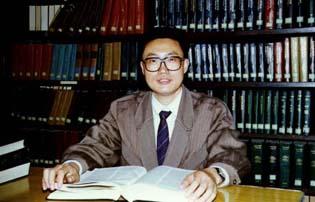
Dr. Shuping Bi is Professor of Chemistry at Nanjing University (NJU) of China. He obtained his higher education at NJU from 1979 to 1989 (B.S., 1983 and Ph.D. 1989), working with Prof. Hong Gao (H.Kao, Science Academician of China), and then joined the faculty at NJU in 1989. He has been a postdoctoral fellow at Smithsonian Environmental Research Center (SERC) in 1992-1993, following as a visiting scientist working in SERC in 1995 and 1996. It was in SERC that he started work on the speciation of toxic metal ion (aluminum) and its biological effects, a research area that his group has contributed to for the past 27 years. As a senior visiting scientist, he also spent a semester in 2001 at the Center for Environmental Biotechnology, Lawrence Berkeley National Laboratory, University of California at Berkeley, where he carried out the mechanism study dealing with the bio-remediation for contaminated environment. From 2003.12-2004.8, he spent a sabbatical stay at the Laboratory of Electrochemistry, Chemistry and Biochemistry Department, University of Texas at Austin, working with Prof. Allen J. Bard, where he started the research by applying Scanning Electrochemical Microscope (SECM) to elucidate the reaction mechanisms involved in biological chemistry processes.
Show All
Work Experience
Prof. Bi is currently serving as the editor members of eight Chinese journals including “Chinese Journal of Analytical Chemistry”, “Chinese Journal of Environmental Chemistry”, “Spectroscopy and Spectral Analysis”, “Chinese Journal of Analytical Sciences”, “Journal of Instrumental Analysis”, “Chinese Journal of Inorganic Analytical Chemistry”, “The Administration and Technique of Environmental Monitoring” and “Chinese Journal of Sensors and Actuators”. He also serves as the reviewer for famous international journals, such as, Science, Nature Communications, Environmental Science & Technology and Geochimca et Cosmochimica Acta., etc. Show All
Research
Prof. Bi’s main research interests are in the field of study on the interaction of metal ions with some important biological molecules including proteins and DNA. By applying various modern analytical methodologies including electrochemical, spectrometric, chromatographic, magnetic methods, as well as combining with computer simulations and quantum chemical calculations, the structure and mechanism for the interaction of metal ions with biomolecules are studied comprehensively. Particularly, the typical metal ion, aluminum(III), has been extensively investigated involving its speciation analysis in biological and environmental samples and elucidation of its toxic mechanism. Publications
Prof. Bi has published over 200 peer-reviewed research papers. He is one of the recipients of the 1991 the Third Class National Natural Science Award of China for the establishment of fundamental theory and application of novel electroanalytical method. He was also the awardee of the Fok Ying Tung Education Foundation of Hong Kong for the Outstanding Achievement Research in the field of metal ion speciation analysis. In 2001, the State Education Ministration of China awarded the Excellent Teaching and Research Award for the Outstanding Young Teachers at Key Universities of China to him. Course Name, Time and Place
Instrumentation Analysis
Syllabus, Examination Requirements
Teaching Resources
Group
|